
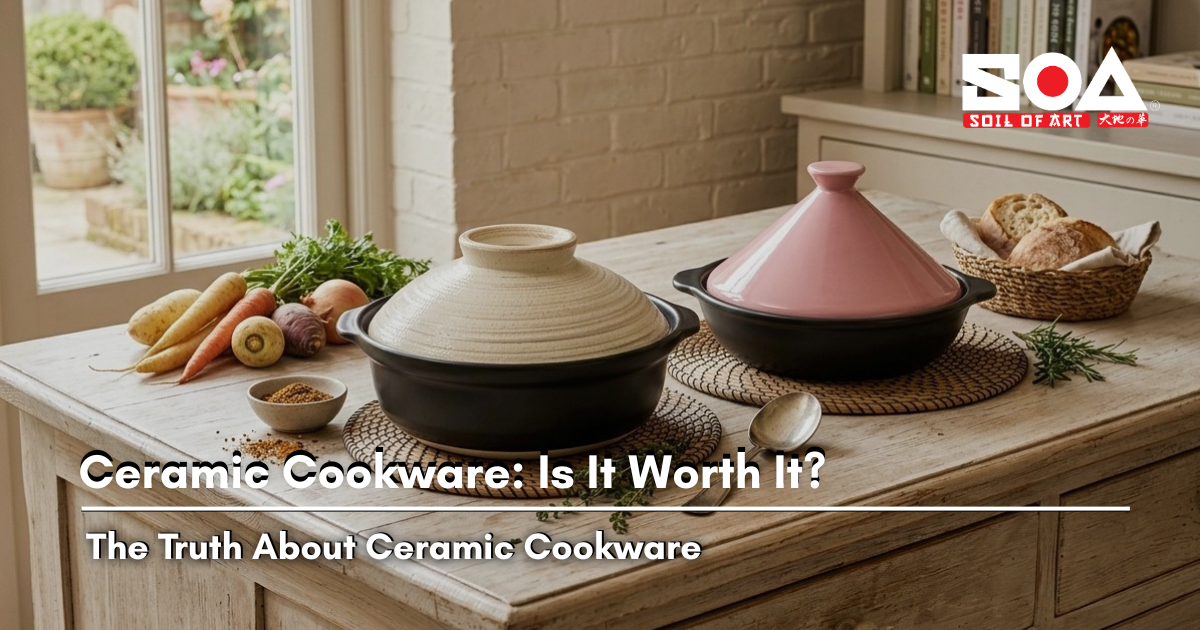
Thinking about switching to ceramic cookware but not sure if it is worth it? From excellent heat retention to beautiful table presentation, ceramic cookware has become increasingly popular among home cooks. However, like any type of cookware, it also has some limitations you should understand before making a purchase.
In this guide, we explore the pros and cons of ceramic cookware, what to look for when choosing one, and whether ceramic cookware is really worth it for your kitchen.
What Is Ceramic Cookware?
Ceramic cookware generally refers to cookware made from ceramic material, while ceramic-coated cookware uses a metal body with a ceramic-based coating. These are two different types of cookware and can offer different cooking experiences.
Traditional ceramic cookware is particularly valued for its ability to retain heat and provide steady, gentle cooking. This makes it well suited to dishes that benefit from slower cooking, such as soups, stews, braises and one-pot meals.
For home cooks who enjoy preparing comforting, family-style meals, ceramic cookware can be a practical and versatile addition to the kitchen.
The Pros of Ceramic Cookware
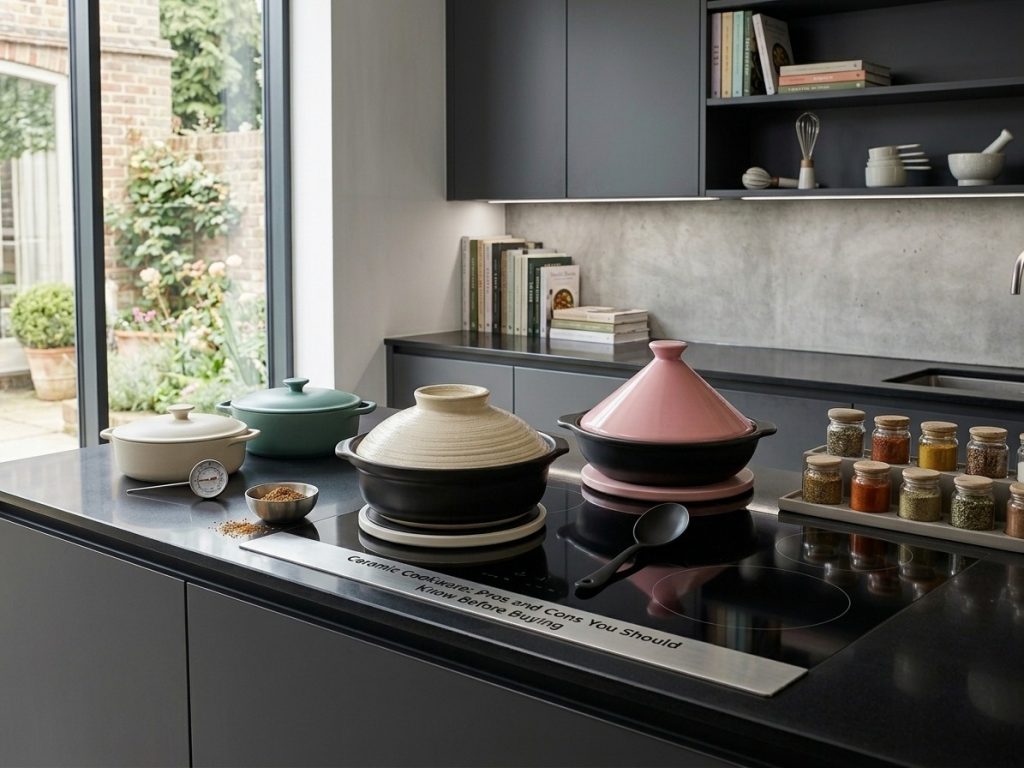
1. Excellent Heat Retention
One of the biggest advantages of ceramic cookware is its ability to retain heat.
Once properly heated, ceramic cookware can maintain a steady temperature, making it particularly useful for slow cooking and simmering. This is one reason ceramic pots are popular for dishes such as soups, stews and braised dishes.
For example, SOA Ceramics’ ceramic cookware is designed with everyday cooking in mind, making it suitable for dishes where consistent, gentle heat is desirable.
2. Great for Slow Cooking
If you enjoy dishes that take time to develop flavour, ceramic cookware can be particularly useful. The retained heat helps create a steady cooking environment for dishes such as:
- Soups and broths
- Braised meats
- Stews
- Curries
- One-pot meals
- Slow-cooked vegetables
Rather than relying on very high heat, ceramic cookware works particularly well when you allow your food to cook gradually.
3. Versatile for Everyday Cooking
Ceramic cookware isn’t limited to one type of cuisine.
A good ceramic pot can be used for everything from a traditional Chinese soup to a Western-style stew or a simple one-pot dinner.
This versatility is one of the reasons SOA Ceramics offers different styles of ceramic cookware for different cooking needs, including casserole pots, IH-compatible cookware and the distinctive Tajine.
The SOA Tajine, for example, can be used to prepare traditional Tajine dishes, but home cooks can also experiment with chicken, seafood, vegetables, braised dishes and other one-pot recipes.
4. From Kitchen to Dining Table
One of the most appealing qualities of ceramic cookware is its presentation.
Instead of transferring food from a cooking pot to another serving dish, many ceramic pots can become part of the dining table itself, depending on the cookware’s intended use and instructions. This is especially useful when serving:
- Family-style meals
- Soups
- Stews
- Braised dishes
- One-pot meals
For SOA Ceramics, this combination of cooking and serving is an important part of the appeal of ceramic cookware.
5. Aesthetic Appeal
Let’s be honest: cookware can also be part of your kitchen’s visual style.
Ceramic cookware often has a distinctive, timeless appearance that can look just as appropriate on the dining table as it does on the stovetop.
For people who enjoy entertaining or serving meals directly from the cookware, this can be a major advantage.
******
The Cons of Ceramic Cookware
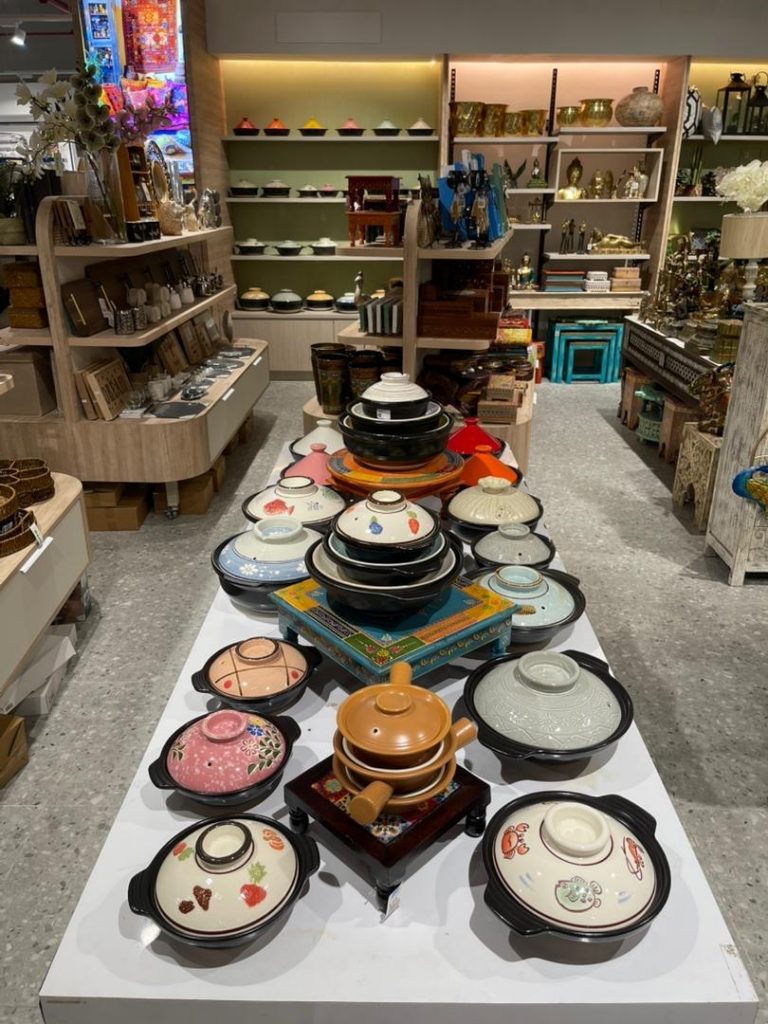
While ceramic cookware has many benefits, it isn’t perfect for everyone. Understanding the limitations is important when deciding whether it is worth buying.
1. Ceramic Cookware Can Be Heavier
Ceramic cookware can be heavier than some lightweight metal cookware.
This is something to consider if you frequently move large pots between the stove, sink and dining table.
However, the additional weight can also contribute to the cookware’s heat-retaining properties.
2. It Requires Proper Heat Management
Ceramic cookware generally performs best when used according to its care and cooking instructions.
Sudden and extreme temperature changes can be a concern with ceramic cookware, so users should pay attention to recommended heat settings and avoid treating it like lightweight metal cookware.
This is especially important for first-time ceramic cookware users.
3. It Can Break or Chip if Mishandled
Unlike stainless steel, ceramic is not designed to withstand being dropped or subjected to strong impacts.
Proper handling and storage are therefore important if you want your cookware to remain in good condition for years.
4. There Is a Learning Curve
If you are used to cooking with thin metal pans at very high temperatures, ceramic cookware may require some adjustment.
Instead of immediately turning the heat to maximum, learn how your ceramic cookware responds to heat and follow the manufacturer’s instructions.
Once you understand how it performs, cooking with ceramic cookware can become very intuitive.
There is no single cookware material that is best for every kitchen.
The right choice depends on what you cook, how you cook and what you value most in cookware.
******
Is Ceramic Cookware Worth It?
For many home cooks, the answer is yes — particularly if you enjoy soups, stews, braised dishes and one-pot cooking.
Ceramic cookware is worth considering if you want cookware that:
- Retains heat well
- Is suitable for slow cooking
- Can handle a variety of everyday dishes
- Looks good enough for serving
- Can become a long-term part of your kitchen
However, if you regularly cook at extremely high temperatures or prefer very lightweight cookware, another material may suit you better.
The key is not simply asking “Is ceramic cookware good?”
Instead, ask:
“Does ceramic cookware suit the way I cook?”
******
What to Look for When Buying Ceramic Cookware
Not all ceramic cookware is the same. Before buying, consider the following:
Material and Safety
Understand what the cookware is made from and what materials are used in its construction. Look for brands that are transparent about their materials and manufacturing standards.
Heat Distribution
Good cookware should provide consistent cooking performance rather than creating excessive hot spots.
Heat Retention
If you enjoy soups, stews and slow-cooked dishes, strong heat retention can be a significant advantage.
Durability
Consider the quality of the ceramic, construction and finish, as well as how well the cookware is designed to withstand regular use.
Versatility
Think beyond one recipe. Can you use the cookware for soups, braises, stews, one-pot meals and everyday family cooking?
Care Requirements
Always check the manufacturer’s instructions for suitable heat levels, cooking surfaces, cleaning and temperature changes.
******
Why Choose SOA Ceramics?
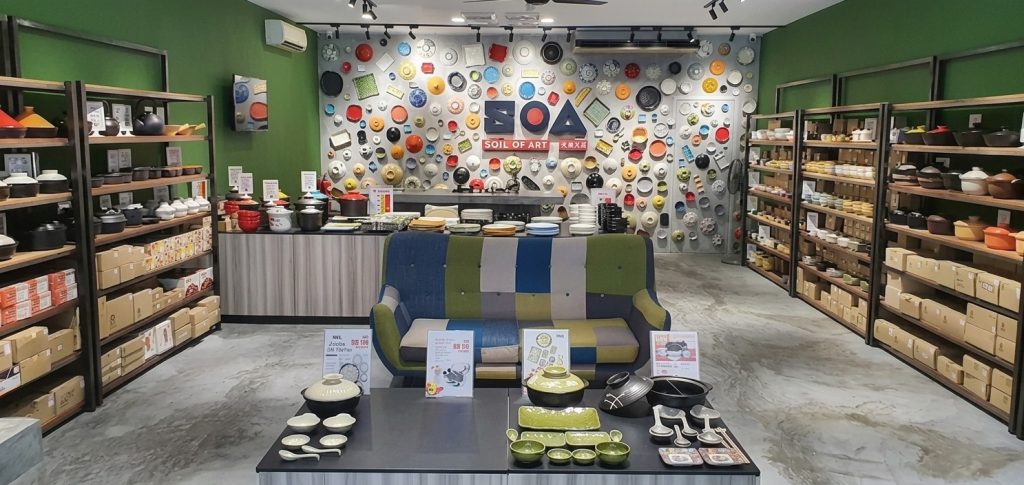
Established in Malaysia in 1991, for more than three decades, SOA Ceramics has been part of the home cooking experience, with ceramic cookware designed around the everyday needs of home cooks.
Rather than focusing on just one style of cooking, SOA’s range includes cookware suited to different ways of preparing and serving food — from traditional soups and braised dishes to modern one-pot meals.
Its Tajine is a good example of this versatility. While traditionally associated with slow-cooked Moroccan dishes, Tajine can also be used creatively for everyday Asian and Western-style cooking.
The idea is simple:
Good cookware should not limit what you can cook. It should inspire you to cook more.
Whether you are preparing a comforting soup for the family, a slow-cooked braise for Sunday dinner, or experimenting with a new Tajine recipe, choosing cookware that matches your cooking habits can make the experience more enjoyable.
Final Verdict: Is Ceramic Cookware Worth Buying?
Ceramic cookware has clear advantages, particularly when it comes to heat retention, slow cooking, versatility and presentation. It also has limitations, including weight, handling requirements and the need for proper heat management.
Ultimately, ceramic cookware is not about replacing every other type of cookware in your kitchen. It is about having the right tool for the way you cook.
If you enjoy slow-cooked meals, soups, stews, braises and one-pot dishes — or simply want cookware that can go from kitchen to table beautifully — ceramic cookware may be well worth considering.
And with the right piece, everyday cooking can become more than just preparing a meal. It can become something you genuinely enjoy.
Discover SOA Ceramics and find the ceramic cookware that fits your kitchen and your cooking style.